









Webflow guides, tutorials and product notes
Practical writing on Webflow — CMS modelling, performance, SEO, forms and the day-to-day decisions that come with building and maintaining real sites.
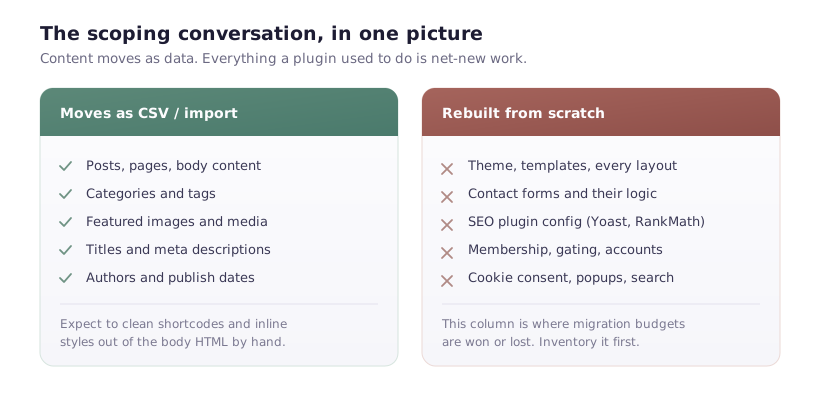
Migrating WordPress to Webflow without losing your search traffic
The content moves in an afternoon. The redirects, the plugin functionality and the rebuild are where migrations actually succeed or fail — here's the sequence that protects your rankings.
Read article →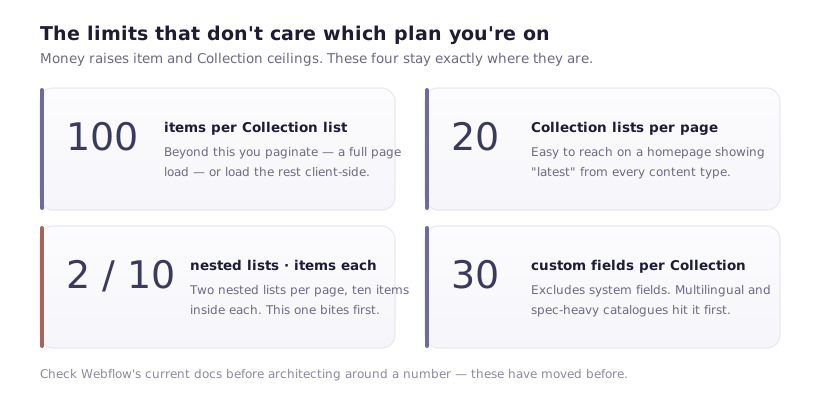
Webflow CMS limits in 2026: what changed, what breaks, and how to design around it
Webflow consolidated its plans in May 2026, and most CMS limit guides online are now out of date. Here's the current picture — plus the structural limits no upgrade will fix.
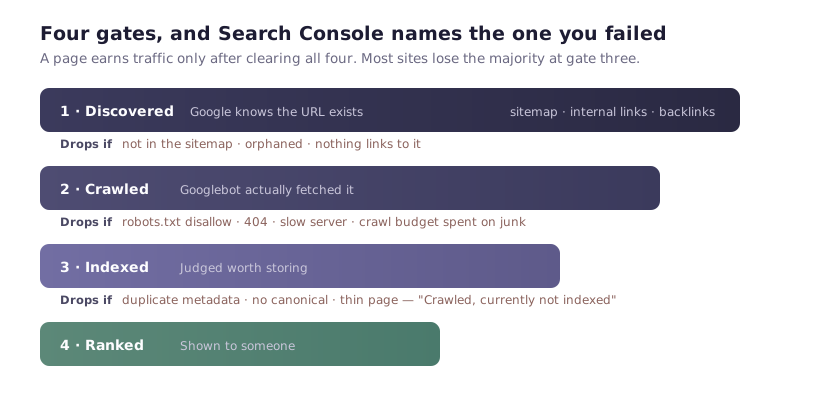
Webflow technical SEO: the settings that decide whether Google indexes you
A field guide to the Webflow SEO settings that matter — indexing, canonicals, sitemaps, redirects — and the failure modes that quietly keep good pages out of the index.
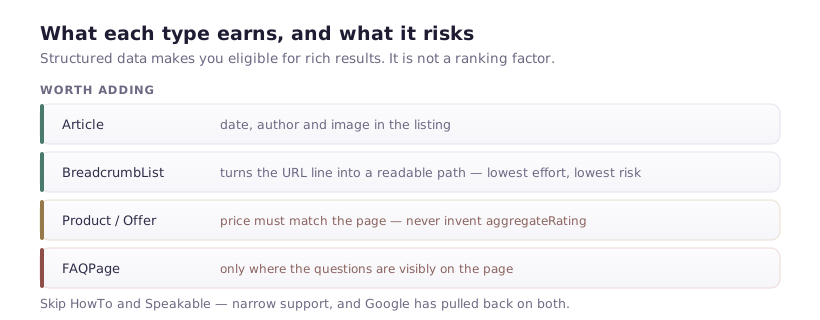
Structured data in Webflow: Article, FAQ, Product and Breadcrumb JSON-LD
Webflow won't generate schema markup for you. Copy-ready JSON-LD for the four types worth having, bound to CMS fields — and the markup that gets sites penalised.
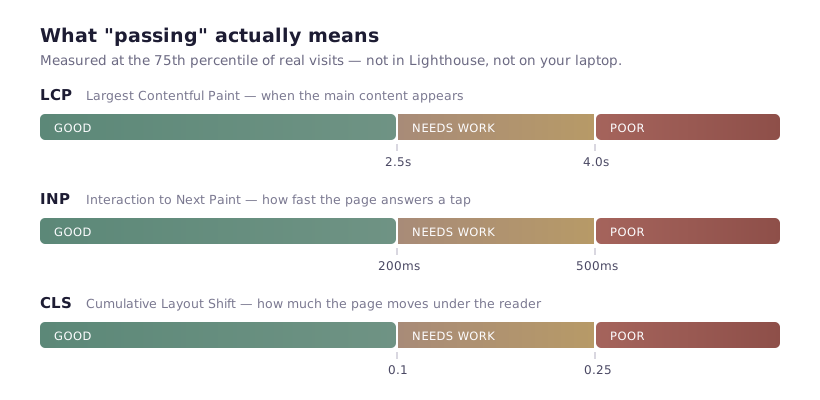
Why your Webflow site is slow (and which fixes actually move Core Web Vitals)
Most Webflow speed advice optimises the wrong thing. Here's what genuinely controls LCP, INP and CLS on a Webflow build — and the fixes worth your afternoon.
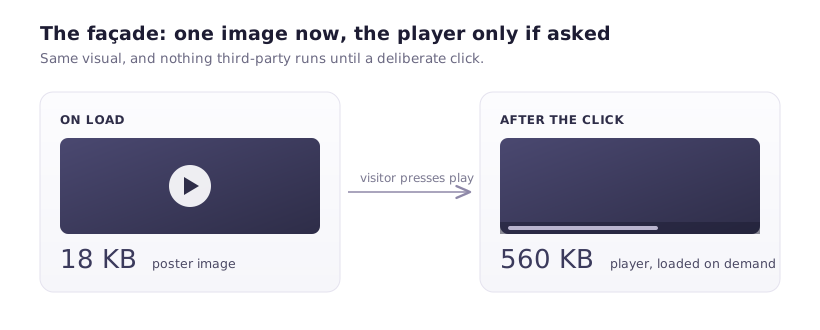
Lazy-loading embeds, maps and video in Webflow the right way
Third-party embeds are the heaviest thing on most Webflow pages and the easiest to defer. A façade pattern that keeps the layout stable and the main thread free.
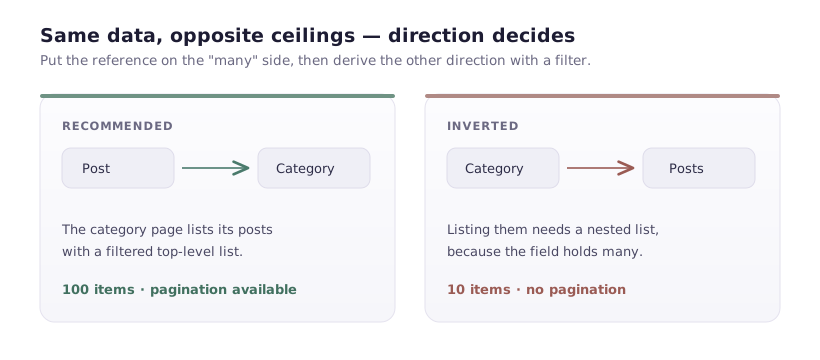
Multi-reference fields in Webflow: modelling tags, authors and related content
When to reach for a multi-reference field, when a plain option field is better, and the three limits that decide whether your model survives contact with real content.
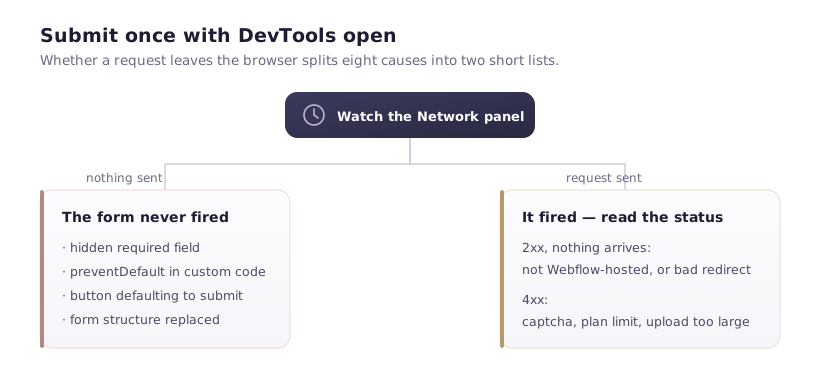
Webflow form not submitting? Work through these eight causes in order
A diagnostic sequence for Webflow forms that fail silently, ordered by how often each cause is the real one — starting with the two that account for most cases.
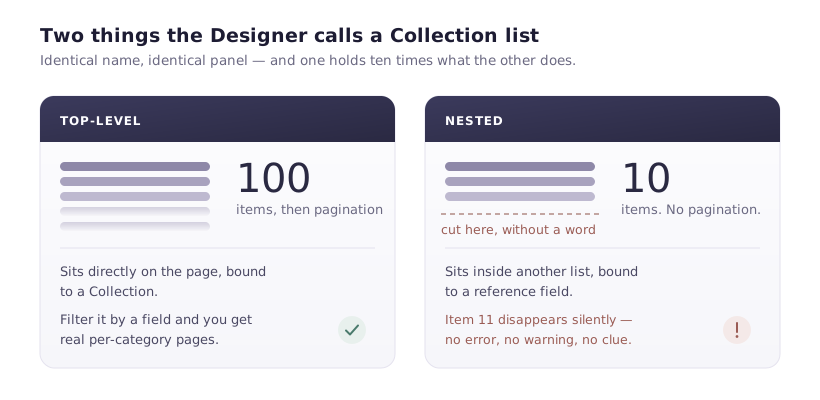
Webflow Collection list only showing 10 items? Here's what's actually happening
Nested Collection lists cap at 10 items and give no warning when they truncate. How to confirm that's your problem, and the four ways out — with the trade-offs stated.
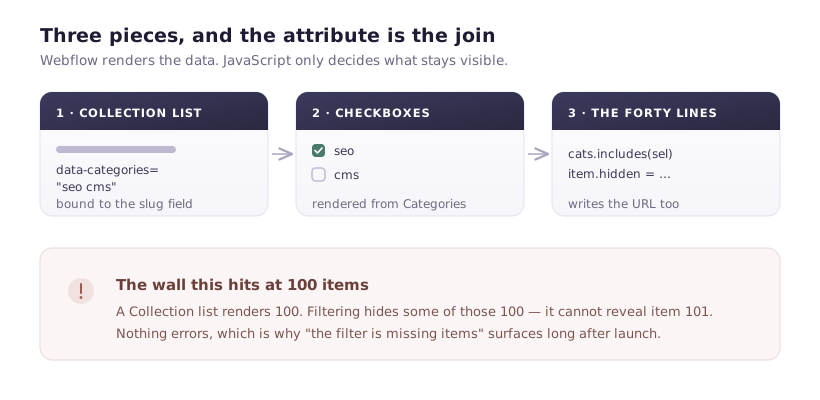
Build a filterable CMS grid in Webflow without a plugin
A working filter built from Collection lists, checkboxes and about forty lines of JavaScript — plus an honest account of where the no-code route stops being the right call.
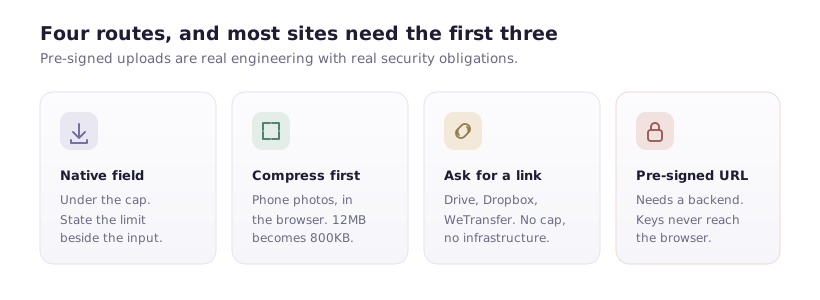
Handling file uploads in Webflow beyond the built-in size limit
Webflow's upload field is fine for a CV and unusable for a video. Three routes past the limit, and the client-side compression that avoids the problem entirely.
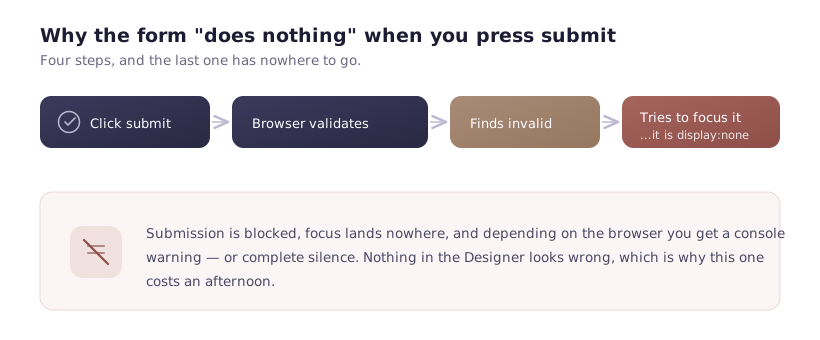
Conditional form fields in Webflow without third-party tools
Show fields based on earlier answers using about thirty lines of JavaScript — including the required-field trap that silently blocks submission.


